
The rapid advancement of artificial intelligence is transforming every aspect of human civilization – from healthcare and education to finance and governance. But as AI systems become more powerful and pervasive, they also create new risks to individual freedom and financial sovereignty. In this landscape, Bitcoin’s properties as decentralized, censorship-resistant money become not just valuable but essential.

The AI Revolution in Finance
Artificial intelligence is already reshaping the financial system. AI-powered trading algorithms execute the majority of stock market transactions. Machine learning models assess creditworthiness, detect fraud, and make lending decisions. Central banks are exploring AI for monetary policy optimization. And a new generation of AI financial assistants is managing portfolios, executing trades, and providing financial advice.
These developments offer genuine benefits: faster transactions, lower costs, more accurate risk assessment, and broader access to financial services. But they also create new forms of financial control that would have been impossible just a few years ago.
The Surveillance Risk
AI systems are inherently data-hungry. To function effectively, they require vast amounts of information about individuals, their behavior, their preferences, and their financial activity. In the traditional financial system, this data is already collected by banks, payment processors, and governments. AI amplifies this surveillance capability exponentially.
Consider what an AI-powered financial surveillance system could do:
- Real-time transaction monitoring: AI can analyze every financial transaction in real-time, flagging “suspicious” activity based on patterns that humans would never detect
- Behavioral profiling: AI can build detailed profiles of individuals based on their spending habits, predicting future behavior and flagging deviations
- Social credit scoring: AI can assign financial trust scores based on social media activity, associations, and purchasing patterns
- Predictive enforcement: AI can identify individuals likely to engage in “undesirable” financial behavior and preemptively restrict their access
This is not science fiction. China’s social credit system already uses many of these techniques. Western governments and financial institutions are rapidly adopting similar capabilities.
Programmable Money and Financial Control
Central Bank Digital Currencies (CBDCs) represent the convergence of AI and financial control. Unlike cash or Bitcoin, CBDCs are programmable – the issuing authority can set rules about how, when, and where the money can be spent. Combined with AI, programmable money creates unprecedented potential for financial control.
Imagine a world where:
- Your digital currency expires if not spent within a certain timeframe (to “stimulate” the economy)
- Your spending is automatically taxed at different rates based on what you buy (to “nudge” behavior)
- Your financial access is restricted based on your social credit score (to enforce compliance)
- Your transactions are automatically reported to authorities (to prevent “undesirable” activity)
- Your money can be frozen instantly if an AI system flags your behavior as suspicious
Programmable money is the most dangerous financial innovation in human history. Combined with AI, it creates a system of total financial control that no dictatorship has ever achieved.
Digital rights advocates, 2025
Why Bitcoin Is the Antidote
In a world of AI-powered financial surveillance and programmable money, Bitcoin offers something essential: financial freedom. Bitcoin cannot be programmed. It cannot be frozen. It cannot be inflated. And it cannot be surveilled in the same way as the traditional financial system.
Here is why Bitcoin matters more than ever in the age of AI:
1. Censorship Resistance
No AI system, no government, and no corporation can prevent you from sending or receiving Bitcoin. This is not a policy choice – it is a mathematical property of the Bitcoin protocol. In a world where financial censorship is becoming easier and more common, this property is invaluable.
2. Privacy
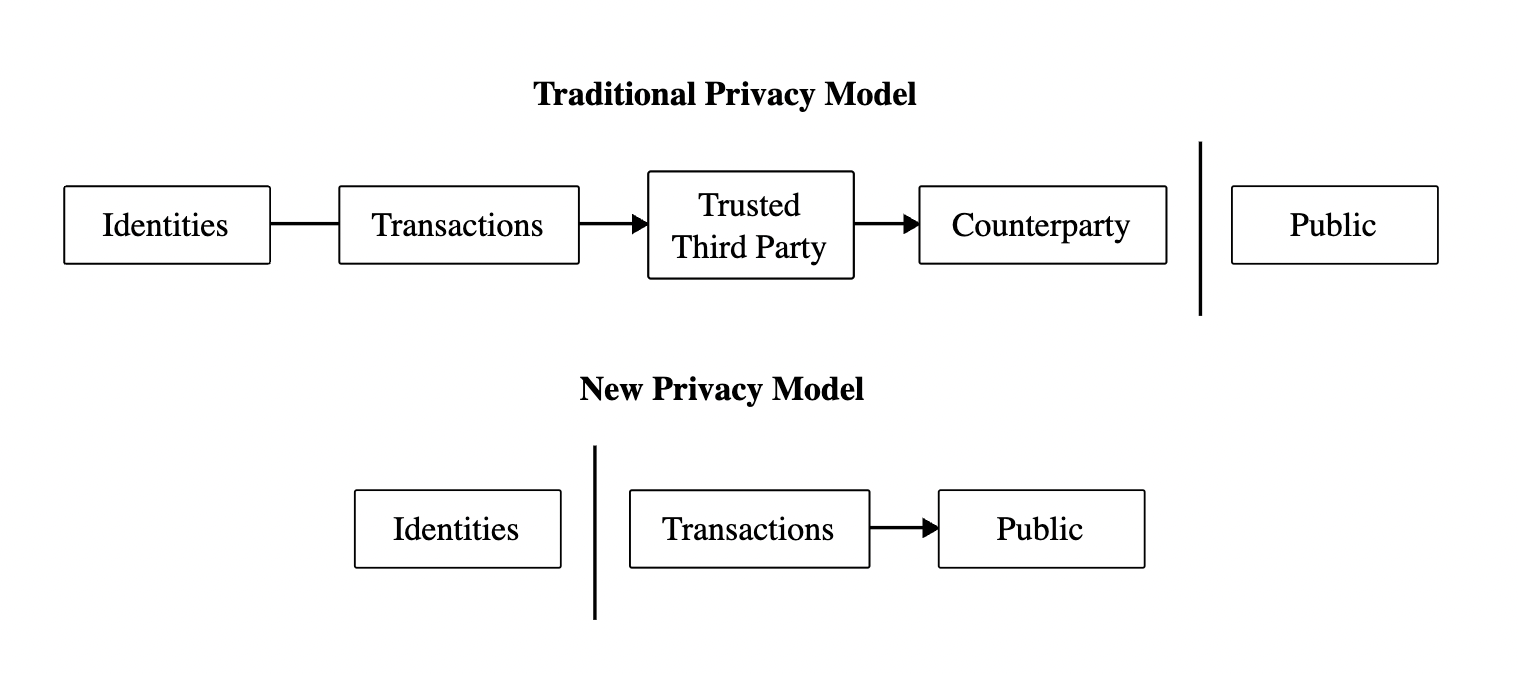
While Bitcoin is not perfectly anonymous, it offers significantly more privacy than the traditional financial system. With proper techniques (CoinJoin, PayJoin, Lightning Network), Bitcoin transactions can be made extremely difficult to trace. This is increasingly important as AI-powered surveillance becomes more sophisticated.
3. Fixed Supply
Bitcoin’s fixed supply of 21 million coins means that no AI system, no central bank, and no government can create more Bitcoin. In a world where AI is being used to optimize monetary policy (often meaning more money printing), Bitcoin’s absolute scarcity is a powerful counterweight.
4. Decentralization
Bitcoin has no CEO, no board of directors, and no central point of control. This means there is no entity that can be pressured by governments, compromised by AI, or corrupted by incentives. The Bitcoin network is maintained by thousands of independent nodes and miners around the world.
5. Permissionless Access
Anyone with an internet connection can use Bitcoin. No bank account, no credit check, no government ID is required. This is particularly important as AI-powered financial systems increasingly exclude individuals based on algorithmic decisions.
AI and Bitcoin: Allies, Not Enemies
It is worth noting that AI and Bitcoin are not inherently opposed. In fact, AI can enhance the Bitcoin ecosystem in many ways:
- Smart contract optimization: AI can help optimize Bitcoin smart contracts and Layer-2 protocols
- Security: AI can detect and prevent attacks on the Bitcoin network
- Mining optimization: AI can optimize mining operations for efficiency and profitability
- User experience: AI can make Bitcoin wallets and applications more user-friendly
- Market analysis: AI can provide insights into Bitcoin market dynamics
The key distinction is that AI should serve Bitcoin users, not control them. Bitcoin provides the foundation of financial sovereignty; AI can be a tool that enhances that sovereignty rather than undermining it.
The Stakes
The convergence of AI and finance is creating a crossroads for humanity. One path leads to a world of programmable money, AI-powered surveillance, and total financial control. The other path leads to a world of financial sovereignty, privacy, and individual freedom. Bitcoin is the technology that makes the second path possible.
As AI becomes more powerful, the importance of decentralized, censorship-resistant money only grows. The choices we make now about the future of money will determine the future of human freedom.
Learn more about Bitcoin’s role in preserving financial freedom at bitcoin.org.
Another important consideration is the role of Bitcoin in an AI-driven economy. As AI systems become more capable of managing financial transactions, the need for a neutral, programmable money becomes more acute. Bitcoin, with its fixed supply and decentralized governance, is uniquely positioned to serve as the monetary layer for an AI-driven economy.
The convergence of AI and Bitcoin is one of the most exciting developments in the tech world. As these two technologies continue to evolve, their interaction will shape the future of money, work, and human civilization.