
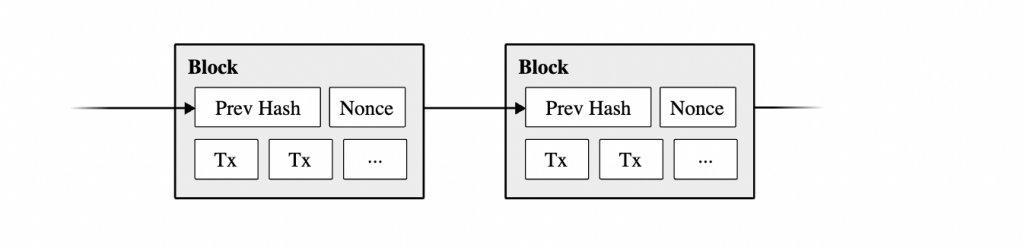
Since its inception in 2009, Bitcoin has been the target of relentless attacks – from hackers, governments, and even well-meaning developers who wanted to change its rules. Yet Bitcoin has never been successfully attacked. No one has ever double-spent Bitcoin. No one has ever inflated the supply. No one has ever censored a transaction. Understanding why requires understanding Bitcoin’s security model.
Proof of Work: The Foundation
Bitcoin’s security is based on proof of work – the requirement that miners expend real-world energy (electricity) to add blocks to the blockchain. This creates an economic cost to attacking the network:
- To double-spend a transaction, an attacker would need to control more than 50% of the network’s total mining power.
- As of 2025, the Bitcoin network’s hash rate is over 500 exahashes per second – more computing power than the world’s top 500 supercomputers combined.
- Acquiring enough hardware and electricity to attack the network would cost tens of billions of dollars.
- Even if an attacker succeeded, the attack would likely crash Bitcoin’s price, destroying the value of the Bitcoin they stole.
This is the genius of proof of work: it makes attacking the network economically irrational. The cost of attack far exceeds the potential reward.
Decentralization: No Single Point of Failure
Bitcoin’s security is further enhanced by its decentralization:
- Thousands of nodes: Over 15,000 reachable Bitcoin nodes exist worldwide, each independently verifying all transactions and blocks.
- Distributed mining: Mining is spread across many countries, companies, and individuals. No single entity controls a majority of the hash rate.
- Open-source code: Bitcoin’s code is publicly auditable. Anyone can review it, propose changes, or fork it if they disagree with the direction.
- No leader: Bitcoin has no CEO, no board of directors, and no marketing department. It is maintained by a global community of volunteers.
The 51% Attack: Theory vs. Reality
The most commonly discussed attack on Bitcoin is the 51% attack – where an entity controls a majority of the mining power. In theory, this would allow the attacker to:
- Double-spend their own transactions
- Prevent specific transactions from being confirmed
- Prevent other miners from finding blocks
In practice, a 51% attack is extremely difficult and limited:
- The attacker cannot steal Bitcoin from other addresses (they do not have the private keys).
- They cannot change the block reward or create new Bitcoin.
- They cannot alter old transactions buried under many confirmations.
- The attack would be immediately visible to the entire network.
- The community could respond by changing the proof-of-work algorithm, rendering the attacker’s hardware useless.
Social Consensus: The Ultimate Security Layer
Perhaps Bitcoin’s most important security feature is not technical – it is social. Bitcoin’s rules are ultimately enforced by its users. If a majority of users reject a change, that change cannot be enforced. This is what happened during the “Blocksize War” of 2015-2017, when a group of developers and miners tried to increase the block size. The users rejected the change, and the attackers were forced to create a separate chain (Bitcoin Cash) that has since become irrelevant.
This social consensus is Bitcoin’s ultimate defense. No amount of computing power can override the will of the users. As long as users value decentralization and sound money, Bitcoin’s rules will be enforced.
The Bottom Line
Bitcoin’s security model is a masterpiece of game theory, cryptography, and economics. It creates a system where honesty is more profitable than cheating, where attacking the network is more expensive than supporting it, and where the users ultimately control the rules. After 15 years of operation, billions of dollars in value, and countless attacks, Bitcoin’s security model has never been broken. It is, quite simply, the most secure computer network in history.