
Bitcoin mining is one of the most misunderstood aspects of the Bitcoin network. Many people picture miners with pickaxes digging for gold, but the reality is both more technical and more fascinating. Mining is the process that secures the Bitcoin network, processes transactions, and introduces new Bitcoin into circulation – all at the same time.
What Is Mining, Really?
At its core, mining is the process of using specialized computers to solve complex mathematical puzzles. These puzzles are deliberately difficult to solve but easy to verify. When a miner finds a solution, they get to add a new block of transactions to the Bitcoin blockchain and receive a reward in Bitcoin.
This system is called “Proof of Work” (PoW), and it serves a critical purpose: it makes it extremely expensive to attack the network while making it easy for honest participants to verify everything is correct. The “work” is the electricity and computational power spent solving the puzzle. The “proof” is the solution that anyone can quickly verify.
The Mining Process Step by Step
Here is what happens when a miner mines a block:
- Collect transactions: The miner gathers unconfirmed transactions from the mempool (the waiting area for unconfirmed transactions). They prioritize transactions with higher fees.
- Build a candidate block: The miner assembles these transactions into a block, along with a special “coinbase” transaction that awards them the block reward.
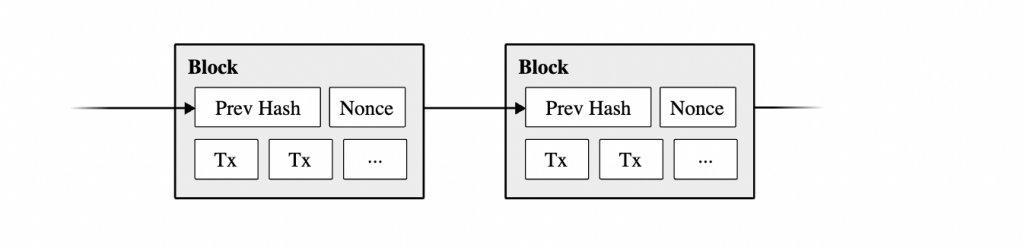
- Calculate the block header: The miner creates a block header containing the previous block’s hash, a Merkle root (a single hash representing all transactions), a timestamp, the current difficulty target, and a nonce (a number they can change).
- Hash repeatedly: The miner runs the block header through the SHA-256 hashing algorithm, changing the nonce each time, looking for a hash that is below the current difficulty target.
- Find the solution: When a miner finds a valid hash, they immediately broadcast the new block to the network.
- Verification: Other nodes verify the block is valid (correct hash, valid transactions, proper reward) and add it to their copy of the blockchain.
- Reward: The successful miner receives the block reward (currently 3.125 BTC after the 2024 halving) plus all the transaction fees from the transactions in their block.
Difficulty Adjustment
One of Bitcoin’s most elegant features is its difficulty adjustment. Every 2,016 blocks (approximately two weeks), the network automatically adjusts the mining difficulty to ensure that blocks are found roughly every 10 minutes, regardless of how much total mining power exists.
If more miners join the network and blocks are found faster, the difficulty increases. If miners leave and blocks slow down, the difficulty decreases. This self-regulating mechanism has kept Bitcoin’s block time remarkably consistent for over 15 years, through enormous changes in the total mining power.
The Halving
Approximately every four years (every 210,000 blocks), the block reward is cut in half. This event is known as “the halving” and is one of the most significant events in Bitcoin’s monetary policy.
The halvings so far:
- 2009: 50 BTC per block (Genesis)
- 2012: 25 BTC per block (First halving)
- 2016: 12.5 BTC per block (Second halving)
- 2020: 6.25 BTC per block (Third halving)
- 2024: 3.125 BTC per block (Fourth halving)
This halving schedule will continue until approximately the year 2140, when the last Bitcoin will be mined. After that, miners will be compensated entirely by transaction fees. The predictable, diminishing supply schedule is what gives Bitcoin its scarcity – and ultimately, much of its value.
Mining Hardware Evolution
Bitcoin mining has undergone a dramatic evolution in hardware:
- 2009-2010: CPU mining. In the early days, you could mine Bitcoin using your computer’s CPU. Satoshi and a handful of early adopters mined thousands of Bitcoin this way.
- 2010-2013: GPU mining. Miners discovered that graphics cards (GPUs) were far more efficient at the SHA-256 hashing required by Bitcoin. GPU mining rigs became the standard.
- 2013-present: ASIC mining. Application-Specific Integrated Circuits (ASICs) are chips designed solely for Bitcoin mining. They are thousands of times more efficient than GPUs. Today, companies like Bitmain, MicroBT, and Canaan produce industrial-scale ASIC miners.
Mining Pools
As mining difficulty increased, individual miners found it nearly impossible to mine a block on their own. Mining pools emerged as a solution: thousands of miners combine their computational power and share the rewards proportionally. Today, most mining happens through pools like Foundry USA, AntPool, F2Pool, and ViaBTC.
Energy and the Environment
Bitcoin mining consumes significant energy – this is by design. The energy expenditure is what makes the network secure. However, the narrative around Bitcoin’s energy use is evolving. An increasing percentage of mining uses renewable energy, and miners are becoming flexible energy consumers who can help stabilize electrical grids by consuming excess power that would otherwise be wasted.
Why Mining Matters
Mining is not just about creating new Bitcoin. It is the mechanism that makes Bitcoin trustless and censorship-resistant. Without mining (or an equivalent consensus mechanism), Bitcoin would require trusted third parties – and all the problems that come with them. Mining transforms electricity into economic security, and that security is what makes Bitcoin the most robust monetary network in history.