
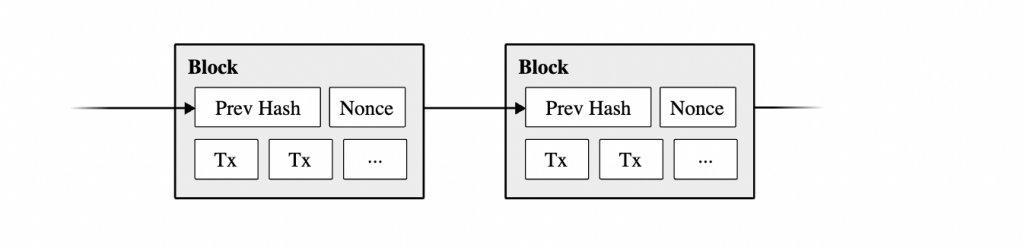
Bitcoin mining is the engine that powers the Bitcoin network. Miners validate transactions, secure the blockchain, and introduce new Bitcoin into circulation. But mining is also a business – a highly competitive, capital-intensive industry where profitability depends on Bitcoin price, energy costs, hardware efficiency, and network difficulty.
How Mining Works
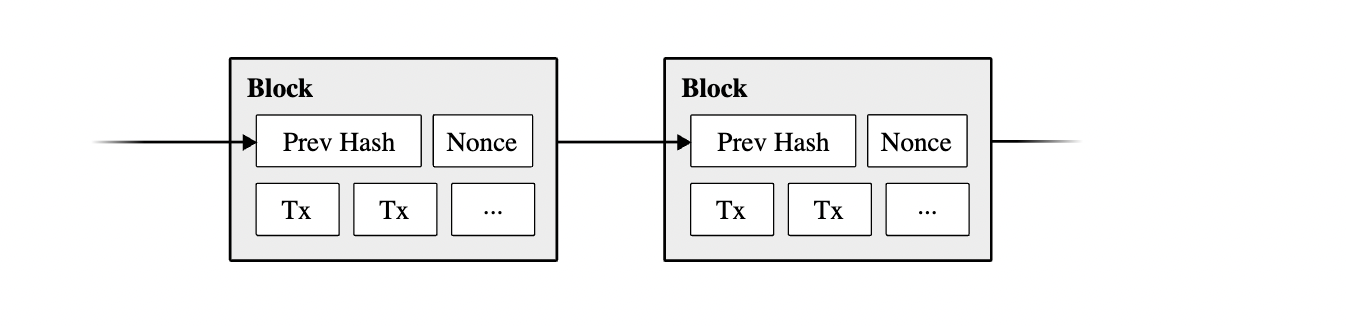
Miners race to solve a cryptographic puzzle: finding a hash below a certain target. The first miner to find a valid hash adds the next block and claims the block reward (currently 3.125 BTC after the 2024 halving) plus transaction fees. This asymmetry – difficult to find, easy to verify – is what makes Bitcoins proof-of-work secure.
Mining Revenue
Revenue comes from two sources. Block rewards are the primary source – currently 3.125 BTC per block, halving every four years. With 144 blocks per day, total daily block rewards are 450 BTC. Transaction fees are the second source, which have become increasingly important, especially during Ordinals and BRC-20 activity.
Mining Costs
Energy is the largest cost for most operations. Modern ASIC miners consume significant electricity, and the cost of that electricity determines profitability. The most efficient miners in 2026 include the Bitmain Antminer S21 (200 TH/s at 3,500W) and MicroBT Whatsminer M60 (186 TH/s at 3,472W).
Hardware costs are also significant. ASIC miners cost thousands of dollars and have a limited useful life of 3-5 years. Infrastructure costs for large-scale operations can reach tens of millions of dollars.
Mining Pools
Individual miners have virtually no chance of finding a block alone. Mining pools combine hash power and distribute rewards proportionally. Major pools include Foundry USA (largest by hash rate), Antpool (operated by Bitmain), F2Pool, ViaBTC, and Marathon Digital.
The Post-Halving Landscape
The 2024 halving cut mining revenue in half overnight, forcing the industry to adapt through consolidation, energy efficiency improvements, vertical integration, and increased reliance on transaction fees. Many mining companies have gone public to raise capital from traditional investors.

The Future of Mining
As block rewards continue to decrease with each halving, transaction fees will become the primary source of mining revenue. This transition is essential for Bitcoins long-term security. The mining industry will continue to evolve with increasing professionalization and integration with the energy sector.
Learn more about Bitcoin mining at bitcoin.org.
The Energy Debate
Bitcoins energy consumption has been one of the most debated topics in the crypto space. Critics argue that Bitcoin wastes energy that could be used for productive purposes. Supporters counter that Bitcoin mining actually helps drive renewable energy development by providing a flexible, location-independent demand for electricity.
The reality is nuanced. According to the Bitcoin Mining Council, approximately 60% of Bitcoin mining uses renewable energy. Miners are naturally drawn to the cheapest energy sources, which are increasingly renewable. Hydroelectric power in Scandinavia and Canada, geothermal energy in El Salvador, and flared natural gas in Texas are all major sources of Bitcoin mining energy.
Moreover, Bitcoin mining can help solve the intermittency problem of renewable energy. Solar and wind power generate electricity inconsistently, and battery storage is expensive. Bitcoin miners can absorb excess renewable energy when production exceeds demand, providing revenue for renewable energy projects that might otherwise be uneconomical.
Mining and the Halving Cycle
The halving cycle is the most important economic event in the Bitcoin mining industry. Every four years, the block reward is cut in half, immediately reducing mining revenue by 50%. This creates a predictable pattern: after each halving, the least efficient miners are forced out, difficulty decreases, and the remaining miners become profitable again.
Historically, each halving has been followed by a significant increase in Bitcoins price, which eventually makes mining profitable again for a wider range of operators. The 2024 halving was no exception – while there was short-term miner capitulation, the subsequent price increase restored profitability.
The Professionalization of Mining
Bitcoin mining has evolved from a hobbyist activity into a professional, institutional industry. Publicly traded mining companies like Marathon Digital, Riot Platforms, and CleanSpark operate massive mining facilities with hundreds of megawatts of power capacity. These companies have access to capital markets, professional management, and economies of scale that individual miners cannot match.
This professionalization has brought legitimacy to the mining industry but has also raised concerns about centralization. The largest mining companies control significant portions of the networks hash rate, and their decisions about which transactions to include in blocks can have a meaningful impact on the network.
Learn more about Bitcoin mining at bitcoin.org.
Geographic Distribution of Mining
The geographic distribution of Bitcoin mining has shifted dramatically since the 2021 China ban. The United States is now the largest mining hub, followed by Russia, Kazakhstan, Canada, and Ireland. This geographic diversification has made the network more resilient to regional disruptions.
Each region brings different advantages: the US offers deregulated energy markets and political stability, Russia and Kazakhstan offer cheap natural gas, Canada offers abundant hydroelectric power, and Ireland offers cool climates that reduce cooling costs.
Learn more about Bitcoin mining at bitcoin.org.
The Rise of Public Mining Companies
One of the most significant trends in the Bitcoin mining industry is the rise of publicly traded mining companies. Marathon Digital, Riot Platforms, CleanSpark, and Iris Energy are among the largest publicly traded Bitcoin miners, with market capitalizations in the billions of dollars.
These public companies have access to capital markets, allowing them to raise funds for expansion through equity and debt offerings. This gives them a significant advantage over private miners, who must rely on their own profits or private funding to grow.
Mining and ESG
Environmental, Social, and Governance (ESG) considerations have become increasingly important for Bitcoin mining companies. Public companies face pressure from investors to demonstrate environmental responsibility, and many have responded by committing to renewable energy and carbon neutrality.
The ESG debate has actually been positive for Bitcoin mining. It has driven the industry toward renewable energy, with many mining companies now powered primarily by hydroelectric, solar, or wind power. It has also led to innovations in energy efficiency, with mining companies developing more efficient cooling systems and energy management practices.
The Long-Term Outlook
The long-term outlook for Bitcoin mining is positive, but the industry will continue to evolve. As block rewards decrease with each halving, miners will need to become more efficient and more dependent on transaction fees. The mining companies that survive will be those with the lowest energy costs, the most efficient hardware, and the best management.
The mining industry is also likely to become more integrated with the energy sector. Mining companies are already partnering with energy companies to develop renewable energy projects, and this trend is likely to accelerate. In the future, Bitcoin mining may be seen not as a competitor to the energy sector, but as a partner.
Learn more about Bitcoin mining at bitcoin.org.